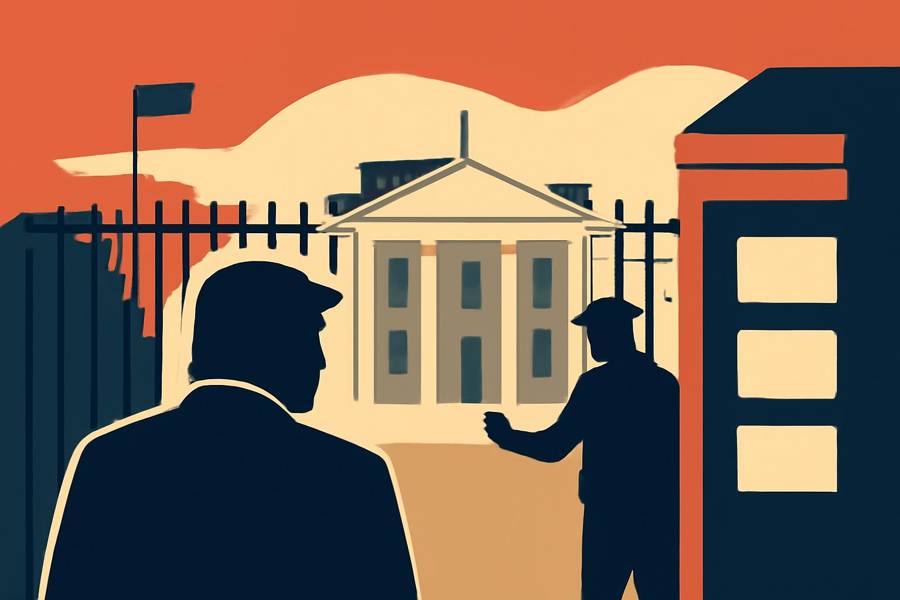
Reporters from CNN, MS NOW and Politico were blocked from entering the White House on Saturday morning, a day after President Donald Trump said he was banning the three outlets from the grounds. CBS News staff on site said they watched MS NOW’s White House correspondent and a cameraman turned away that morning, with credentials revoked, and later saw CNN’s senior White House reporter leave without her badge. The Associated Press reported that Politico’s White House reporter was also denied entry and had her pass confiscated. The Washington Post said Secret Service officers told some reporters their badges had been deactivated.
The refusals came the day after Mr. Trump announced the ban, citing his objection to the outlets’ coverage, according to CBS News and the Post. Asked about Saturday’s denials, both outlets reported that the White House pointed back to the president’s earlier comments rather than offering a new explanation.
The AP identified the three journalists turned away as Betsy Klein of CNN, Akayla Gardner of MS NOW and Cheyenne Haslett of Politico, noting that Gardner and Klein reported from outside the complex after learning their credentials no longer worked. The Post described passes being seized and said one MS NOW producer accompanying Gardner was able to enter even as a photographer’s badge was disabled. CBS News added that MS NOW said it would take steps to defend its constitutional rights and that Politico told its newsroom it would defend access as well.
Press advocates quickly criticized the move. The White House Correspondents’ Association said the action “violates the First Amendment” and urged the administration to restore access immediately. The AP reported similar calls from media law experts and press freedom groups. The Guardian and the Washington Examiner each reported that the three outlets said their journalists were denied entry following the president’s announcement.
Legal context looms in the background. The Washington Post noted past court rulings that, while the government is not required to open its doors to the press, once it creates press facilities for credentialed reporters it cannot exclude them because of their coverage. CBS News reported that a legal analyst characterized the move as content-based discrimination—an issue that has drawn court scrutiny in previous access disputes. AP coverage likewise flagged the possibility of court challenges, and the WHCA’s statement emphasized that standards applied to a disfavored outlet could later be used against any outlet.
Saturday’s enforcement also raises practical coverage questions. The Post pointed out that barring CNN from the grounds could disrupt the traditional television pool structure designed to ensure independent, shared coverage of the president’s movements for the public.
Why it matters
If the White House can block specific outlets because of their reporting, access for any news organization could be on the line next. That means fewer independent eyes on the president’s daily work and fewer chances for basic Q&A that inform voters. The outcome of any legal fight here could shape who gets to ask questions in the people’s house—and how much the public gets to see for itself.