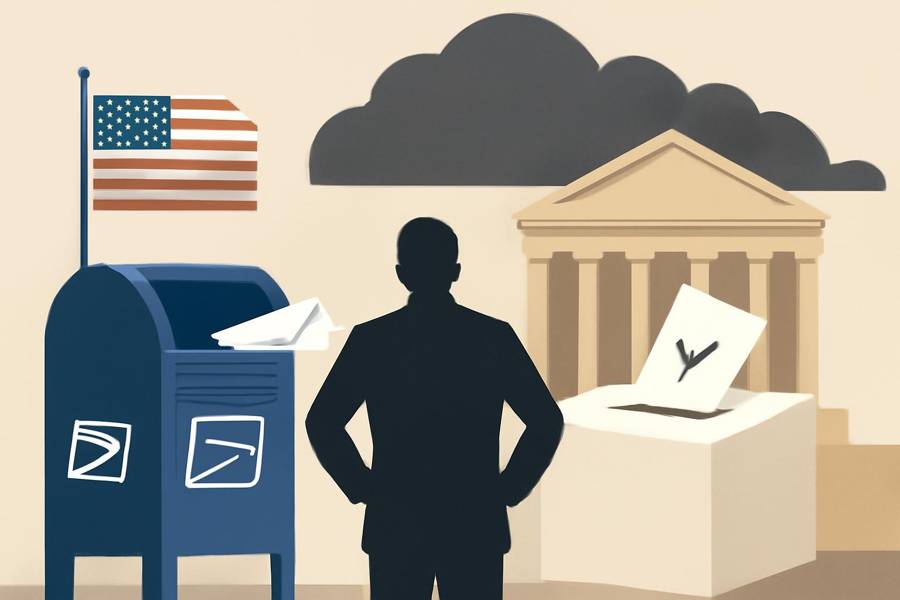
The U.S. Postal Service published a final rule that would tighten how mail-in and absentee ballots are accepted and moved through the mail — but the policy can’t be enforced unless the Supreme Court lifts existing court orders. The New York Times reported that the rule is the agency’s plan for carrying out an earlier executive order directing changes to mail voting and state data-sharing. The Postal Service said it would not implement the changes for the next federal election unless the justices allow it. Washington Examiner and UPI also reported on the final rule and the legal pause now in place.
What would change if the rule takes effect? According to the Times, the Postal Service says it could stop delivering ballots in states that refuse to share specified voter data with the agency. The rule also calls for USPS to review every ballot envelope before accepting it into the mail stream, including verifying that the intended recipient is listed as eligible to receive a mail ballot and that the envelope meets set standards. Washington Examiner reported the rule would require states that use USPS for mail voting to provide lists of eligible voters; USPS could then return a participation list back to each state’s chief election official.
Those plans remain on ice for now. UPI reported that court rulings have blocked the policy for use in the upcoming midterm elections. Washington Examiner noted that a federal judge issued an injunction. The Times said the Justice Department told the Supreme Court it would wait for a ruling before the government enforces the regulation. The Supreme Court is considering the matter.
The rule itself pushes back on criticism that USPS is straying into election administration. The agency argues that states are not required to use the U.S. mail for voting, but if they do, they should follow the agency’s mail standards. The Times also reported that Postmaster General David Steiner has faced criticism from Democratic lawmakers over the plan; he has said the Postal Service will follow court orders and continue delivering ballots.
All three outlets describe the same basic setup: a finalized but frozen policy that could be switched on quickly if the Supreme Court says yes. The Times emphasized that the Postal Service committed in writing not to implement the rule for the next federal election unless the government gets relief from the injunctions. Washington Examiner highlighted the requirement for states to share voter data with USPS, and UPI underscored that multiple injunctions are already in place.
Why it matters
For voters, nothing changes until the Supreme Court rules. If the Court allows the rule to take effect, some states could face new requirements on ballot envelopes and voter data right before ballots go out, which could affect how quickly ballots are accepted and delivered. If the injunctions hold, mail voting should work as it has in recent cycles. Either way, pay close attention to your local election office’s instructions this fall.