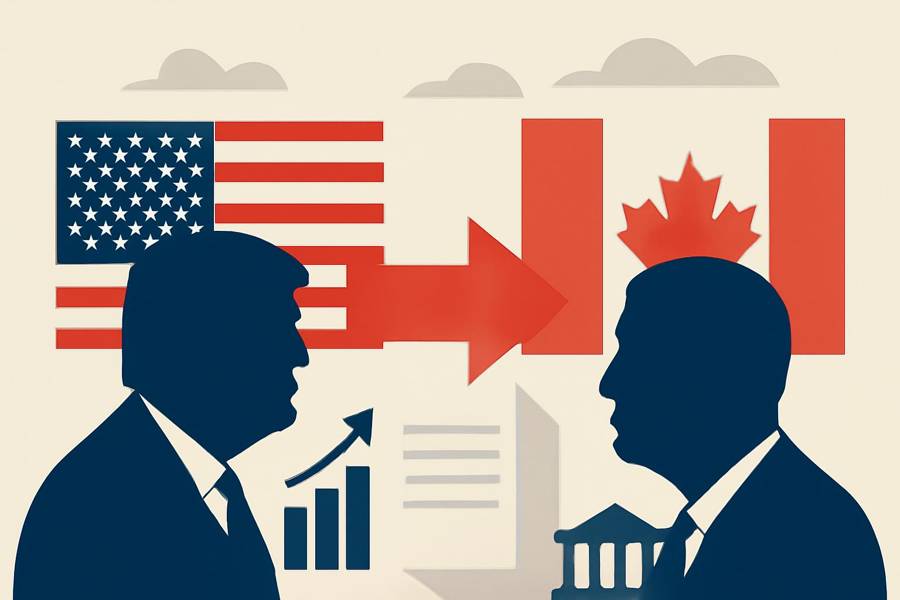
The United States moved ahead with steep tariffs reported to be about 50% on a wide range of Canadian imports after talks collapsed around a deadline. Canada’s prime minister said Ottawa would respond “dollar for dollar,” setting up a rapid round of retaliation between two tightly linked economies, according to statements and reporting by CBS News, Axios and the Associated Press.
Officials on both sides said negotiations broke down in the final hours. The U.S. trade representative, Jamieson Greer, told reporters that Canada had stepped back from earlier understandings; Prime Minister Mark Carney said the U.S. made late changes he called unfair and said those shifts put any deal into question. Canada suspended the talks and recalled its negotiating team to Ottawa, the Prime Minister’s Office announced. Those accounts were echoed across outlets including CBS News, Global News and The Guardian, which noted that each side blamed the other for the collapse.
There is disagreement in public reports about the value of the goods affected. Some outlets gave specific estimates while official statements gave a different figure. Media reports also said the duties were imposed under a legal authority that is not commonly used to levy tariffs, and that some strategic exports were excluded from the action.
What’s on the list? Coverage pointed to everyday goods and some industrial materials among the items affected. Those are goods households notice at the checkout line and materials that builders rely on. The AP noted that importers in the United States pay these tariffs and often try to pass the added costs along to customers, a dynamic that can lift prices for consumers and contractors alike.
The move followed a tense week. Reports said the administration briefly paused the tariffs earlier in the week while talks continued, saying a deal was near; the pause did not hold. Canada said it could not accept the latest terms and would respond in kind, and the prime minister’s statement said Canada would match those tariffs on a dollar‑for‑dollar basis.
Business groups warned of knock‑on effects. The Canadian Chamber of Commerce called the step a blow to North American competitiveness that would raise costs for American buyers and pressure Canadian firms, according to CityNews Vancouver and The Guardian. The cross‑border flow at stake is large: both countries have deep trade ties, reporting by the AP and CBS News emphasized.
As for what comes next, Bloomberg Law reported that no new talks were immediately scheduled after the breakdown. Global News and The Guardian said both governments left the door open to supporting affected workers and industries at home, but provided few specifics. For now, the tariffs are in place, retaliation may follow, and the two neighbors are farther apart than they were at the start of the week.
Why it matters
Tariffs are taxes paid at the border that can show up later in higher prices. If you buy Canadian beer or cheese, you may see bigger grocery bills; if you’re building or renovating, cement and other inputs could cost more. And because U.S. and Canadian supply chains are tightly woven, delays and re‑routing may ripple from warehouses to job sites.