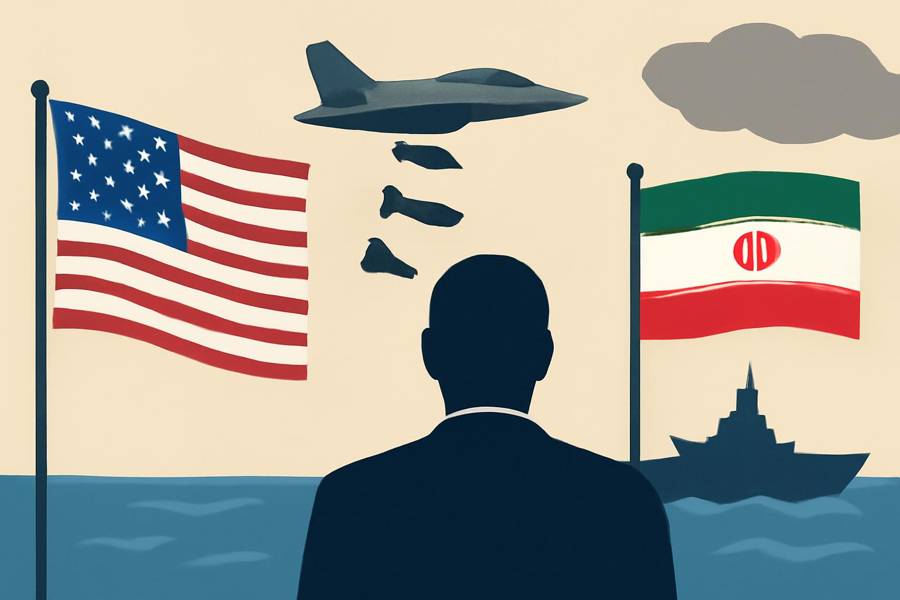
The United States carried out strikes on Iran and announced measures to restrict its shipping, as President Donald Trump said he is reinstating a naval blockade in the Strait of Hormuz and said he may charge a toll on other countries’ cargo. U.S. Central Command set an afternoon start time for enforcement, according to Axios and NPR’s report published by WXXI. Hours before the strikes, Trump said on social media the United States would bring back what he called “THE IRANIAN BLOCKADE.”
The Associated Press reported the U.S. struck targets along Iran’s southern coast. AP said the military described the aims as degrading Iranian coastal defenses, missile and drone sites, and maritime capabilities. Afterward, Iran fired across the region. AP reported nearby states sounded missile sirens and that tankers in the strait were struck, with at least one sailor killed and others injured. Iran’s Revolutionary Guard claimed responsibility for the tanker attacks, AP reported.
Axios reported the blockade order would seek to stop vessels from entering or leaving Iranian ports but would not, the outlet said, stop ships merely transiting the strait between non‑Iranian destinations. The outlet said a U.S. Navy message warned neutral vessels to depart the blockaded area before enforcement and noted that humanitarian shipments such as food and medicine could be allowed after inspection. Axios also reported that Trump said the U.S. would seek a 20% “reimbursement” on cargo for securing safe passage, while a senior Gulf source told the outlet Washington had not coordinated any tolls with regional partners.
NPR, via WXXI, likewise reported that Central Command set an afternoon start time for the blockade and told commercial mariners approaching the Gulf of Oman and the strait to hail U.S. naval forces for instructions. WXXI noted that U.S. policy had previously backed toll‑free passage through Hormuz and that Central Command’s messages did not mention any fees. It also recapped a weekend of back‑and‑forth strikes after Iran said it was closing the waterway.
Both AP and NPR highlighted the broader stakes at play. AP wrote that the U.S. and Iran are vying for control of a chokepoint that carries a significant share of global oil and natural gas shipments. The outlets also reported that benchmark oil prices and U.S. gasoline prices ticked higher.
There is friction over fees. NPR/WXXI reported that Iran’s foreign minister publicly argued that whoever secures safe passage should be compensated and responded to the percentage figure Trump cited. Axios likewise noted Iran’s public pushback while saying U.S. officials have not detailed how any toll system would work.
Why it matters
The Strait of Hormuz is a narrow shipping lane with an outsize impact on what Americans pay for gas, goods, and shipping. A U.S.-Iran showdown there could mean higher energy and freight costs worldwide, new risks for U.S. forces and commercial crews, and tough choices for allies. The added wrinkle of proposed tolls raises legal and diplomatic questions that could complicate U.S. coordination with partners as enforcement begins.