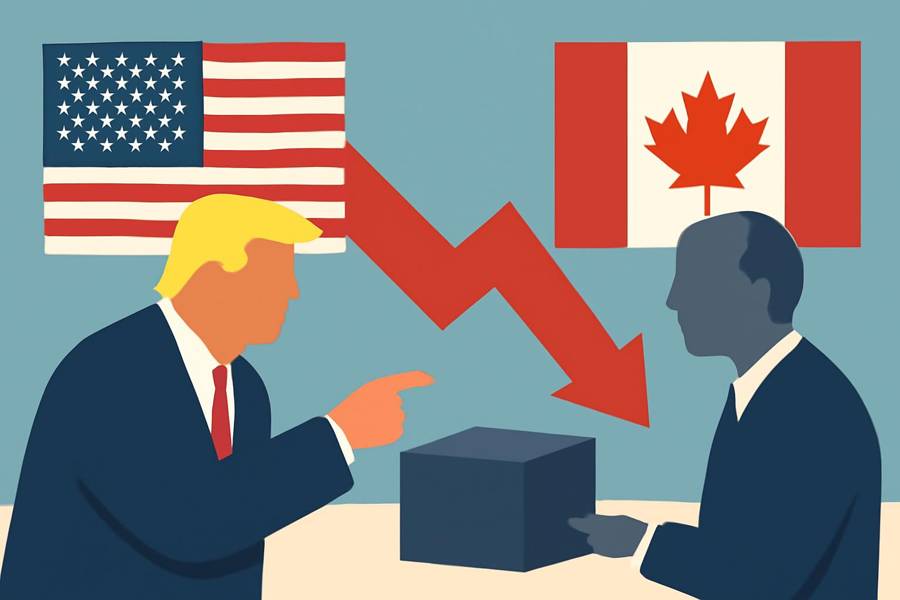
The United States announced a 50% tariff on most Canadian imports, delivered through presidential proclamations under Section 338 of the Tariff Act of 1930. The administration said the move targets what U.S. officials call Canada’s unfair treatment of American autos, alcohol and dairy. The duties are set to take effect after about a month and could apply even to products that would normally get duty-free treatment under the U.S.-Mexico-Canada Agreement. The Associated Press and The Guardian reported the timeline and legal basis, while Axios noted the administration framed this as a first-time use of the Section 338 authority for such a broad action.
The tariffs will hit a wide range of goods. Axios highlighted examples including hockey sticks, wine and cement. Both AP and The Guardian said the measures exclude energy products, fish, critical minerals and potash, and The Guardian added that items already covered by separate national-security tariffs, like steel and aluminum, are also out of scope. Reporters said the short window leaves time for the two countries to negotiate before the new rates could kick in.
Axios reported the duties cover a substantial amount of Canadian imports each year. The administration’s rationale, described by the outlets, centers on claims that Canadian policies disadvantage U.S. products: Ottawa’s auto rules, provincial restrictions on U.S. liquor sales, and dairy practices that Washington says favor some foreign cheeses over American varieties. Reporters said the proclamations cite alleged discrimination in automobiles, alcohol and cheese, and that the new duties could extend to goods that previously benefited from USMCA preferences.
Canada’s initial response mixed firmness with an opening for talks. The Guardian reported that Canada’s prime minister said his government has made proposals to resolve trade disputes and argued prior U.S. tariffs violated the countries’ trade pact. AP likewise reported Canada emphasized a commitment to free and fair trade and signaled readiness to negotiate. Ontario Premier Doug Ford urged Ottawa to match Washington’s approach “tariff for tariff, dollar for dollar,” a stance noted by both AP and The Guardian. Industry groups on both sides of the border called for de-escalation: AP quoted the Distilled Spirits Council of the United States pressing for a negotiated solution before the new rates take effect.
The broader backdrop is tense. AP and The Guardian reported that the Supreme Court recently limited the administration’s emergency tariff powers, pushing the White House to consider other statutes such as Section 338. AP and The Guardian also noted officials have explored, but not implemented, additional measures tied to the impact of Canadian wildfire smoke on U.S. air quality. All three outlets said the new tariffs could push up prices and harden a trade confrontation between two tightly linked economies that had been largely stabilized by USMCA.
Why it matters
For shoppers, a 50% import tax can show up as higher prices on everyday items, from wine and cheese to building materials. For workers, a tariff fight could ripple through cross-border industries like autos, agriculture and hospitality. And if Canada retaliates, U.S. exporters may feel the pinch, too—raising the stakes for a negotiated off-ramp before the roughly monthlong clock runs out.