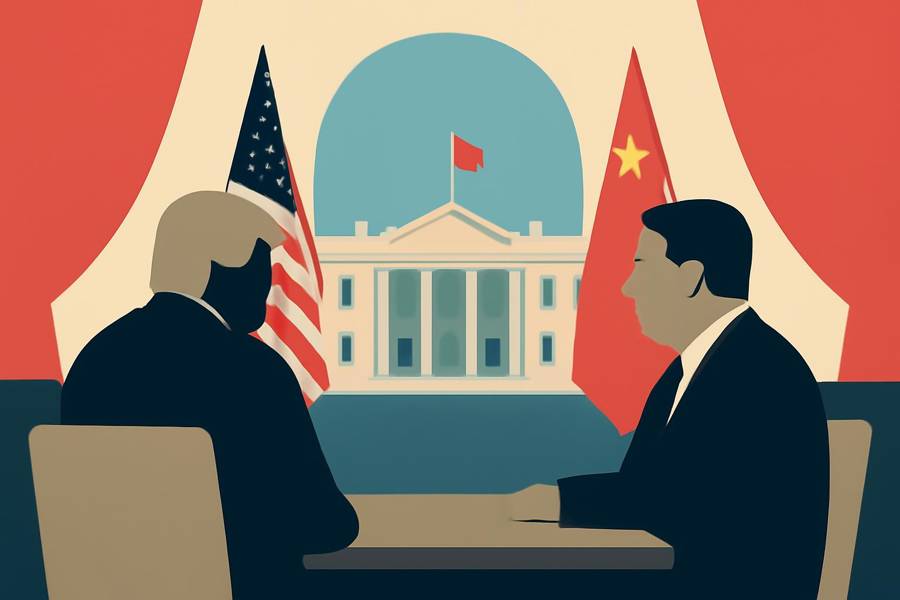
President Donald Trump is hosting Chinese leader Xi Jinping in Washington this week, a carefully staged state visit where the two men are trying to keep relations steady even as they clash over artificial intelligence, trade and the wars reshaping the Middle East. Neither side is promising big breakthroughs, but both governments are signaling a desire to avoid fresh shocks, according to the Associated Press.
On trade, the two countries have stepped back from recent tariff escalation, AP reported. The White House has applied tariffs on imports from multiple partners over forced-labor concerns and is considering additional China-specific levies. Analysts told AP those measures are tolerable for now, but higher tariffs could reignite tensions. Instead of broad duties, Washington and Beijing are using narrower tools: the U.S. has blacklisted certain firms and products, while China has imposed export curbs on drone-related items and taken actions against some U.S. companies over Xinjiang-related measures, AP said.
AI is the hottest pressure point. The U.S. has tightened restrictions on exporting advanced chips to China, arguing Beijing’s developers are drawing on U.S. systems at scale, AP reported. China disputes that characterization. Still, there may be room for cooperation: U.S. officials have proposed a notification mechanism for AI incidents that could touch national security after talks with Chinese officials, AP reported.
Back in Washington, lawmakers are jockeying to lock in tougher AI rules. Senate Democrats used Xi’s visit to spotlight a package of export-control proposals with bipartisan sponsors, Roll Call reported. One proposal would require advanced chips to include location tracking and trigger alerts if diverted or tampered with. Another would push allied governments to sync up equipment controls so chipmaking tools don’t reach adversaries. A further proposal would temporarily restrict sales of the most powerful AI chips to certain foreign buyers. Industry groups warn these steps could hamstring American firms, and some allied governments have objected on behalf of key suppliers, Roll Call said. The measures are tied up in annual defense legislation that is not yet resolved.
The White House is also facing criticism from some Democrats who argue Trump should clamp down harder on AI-related exports during talks with Xi; the administration counters that its approach is already strict and aims to protect U.S. security without ceding the global market, Roll Call reported.
Iran hangs over the talks as well. AP reported the administration is trying to further isolate Tehran economically, while Beijing maintains it can keep trading with Iran. AP also reported that Washington has not imposed significant penalties on China over that trade.
Why it matters
What the U.S. and China decide on tariffs and tech rules shows up in everyday prices and product availability. Tighter AI export controls could shape the pace of new gadgets and the jobs behind them. And how Washington and Beijing handle Iran and other flashpoints may affect global stability and, by extension, America’s security. PoliticalDad’s bottom line: watch the specifics, because the fine print is where costs and risks land on U.S. families.