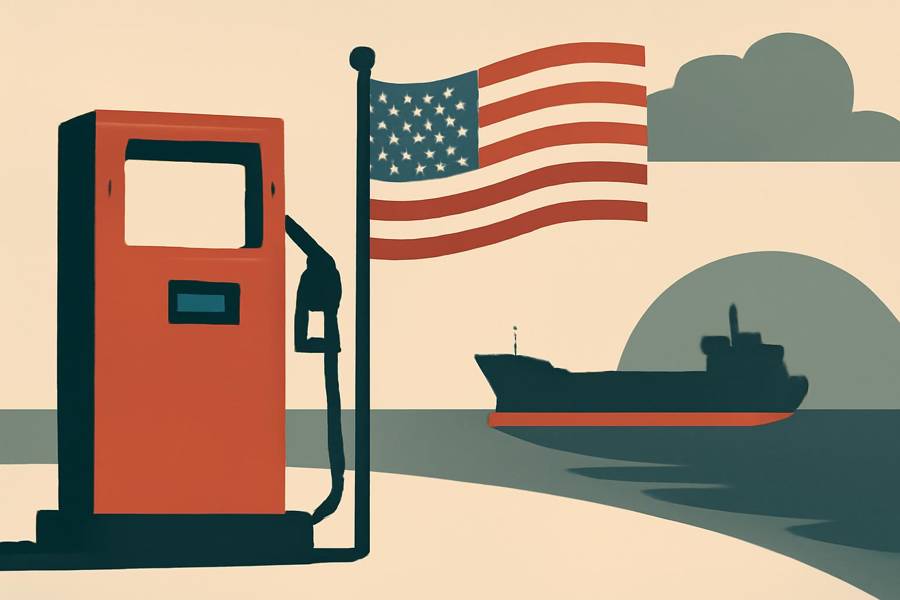
The average price for a gallon of regular gas in the U.S. climbed back to $4 on Monday as renewed U.S.–Iran fighting rattled energy markets, according to AAA data reported by the Associated Press and Axios. Axios put the national average at roughly $4 on Monday morning, a level the country saw earlier this year before a brief pullback. The AP noted that prices are an average, so what drivers see at local stations still varies widely by state and tax rates.
This reverses a recent pullback when the national average dipped below $4 as crude prices eased following an interim U.S.–Iran deal. The AP reports that gas crossed the $4 mark earlier in the year before retreating and then rising again as hostilities resumed. The AP added that prices have climbed compared with earlier periods.
Oil has been on a bumpy ride alongside the headlines. Axios reported that Brent crude climbed amid escalating tensions, then eased to lower levels by Monday morning, while U.S. benchmark crude also moved. The back-and-forth shows how quickly energy markets are reacting to military news and shifting risk around shipping lanes.
The conflict itself has intensified. The AP reported fresh U.S. airstrikes in Iran, and reported Iranian attacks on U.S. allies in the Gulf, including Kuwait and Bahrain, home to the U.S. Navy’s 5th Fleet. Fox News’ live coverage also highlighted Iranian strikes on civilian infrastructure in the Gulf and consecutive nights of U.S. strikes, while noting pressure on shipping. The AP said traffic through the Strait of Hormuz — a vital route for global oil — has been disrupted, a key reason traders are building in a risk premium for barrels moving out of the region.
For drivers, the mechanics are familiar: crude prices and refining margins flow through to the pump, and national averages can mask big local swings. According to Axios’ read of AAA’s tracker, Monday’s average sits around $4. The AP reminds readers that state taxes, proximity to refineries and regional supply all influence what any one station charges, which is why some states have lived above $4 for weeks and others lag the national line.
Higher fuel costs don’t stop at the gas station, either. As the AP put it, pricier gas and oil can filter into the cost of groceries and other goods because transportation gets more expensive. That pocketbook effect tends to color how people feel about the broader economy, and the AP notes affordability may be a key issue for voters going forward.
Why it matters
Gas at $4 makes fill-ups noticeably more expensive, increasing regular household transportation costs. Compared with earlier price levels, the change can add up over time and squeeze monthly budgets. If fighting keeps oil markets on edge, families could see higher delivery and airfare costs, too. And because gas prices are visible on every corner, they can shape how voters judge the economy as campaign season heats up.