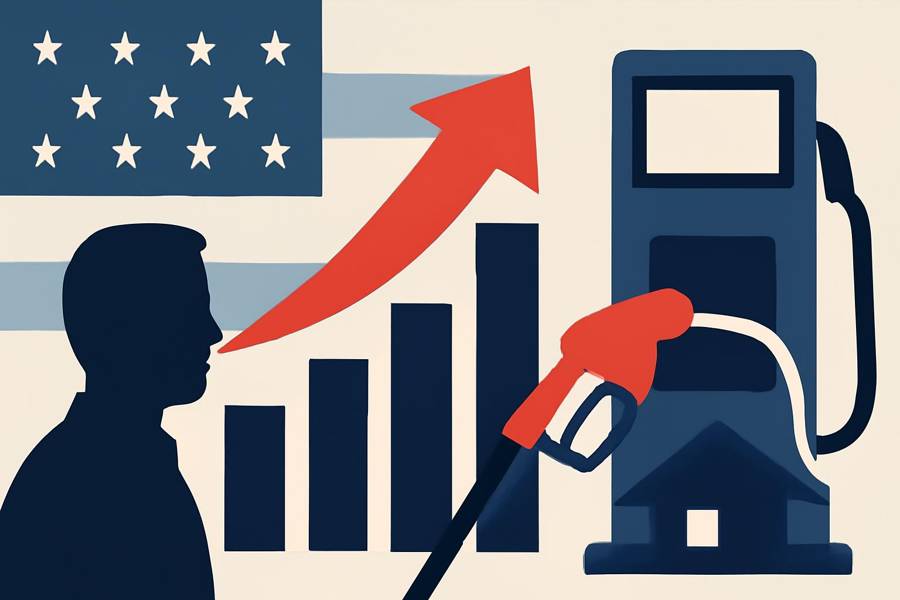
The national average price for regular gas is hovering around $4.10 a gallon, according to AAA’s live dashboard, which listed the average at about $4.10 as of July 28. That’s a touch lower than yesterday but higher than a week and a month ago. The bumpy ride at the pump comes as oil markets swing with headlines from the war involving Iran, a key factor behind recent volatility, the Associated Press reported in a Washington Post story.
AAA’s data show how quickly prices have climbed back. The national average for regular stands at about $4.10 today versus about $4.02 a week ago and about $3.87 a month ago. About $3.14 a year ago. Prices vary widely by state: AAA’s map shows Hawaii above $5 a gallon, while many states on the mainland are clustered just below or above the $4 mark. Diesel, which affects the cost of moving goods, is averaging about $5.32 nationally on AAA’s tracker.
On Wall Street, energy worries are part of a bigger inflation picture. The AP, via the Washington Post, said stocks finished mixed late last week as oil slipped for the first time in several days. The report linked the market’s caution to fighting in the Middle East and noted that concerns about supply routes helped push oil above $100 a barrel before it pulled back. The AP also reported the national gas average was about $4.10, in line with AAA’s figure.
Those price moves land just ahead of a closely watched Federal Reserve meeting. The AP noted that investors are on alert because higher energy costs can feed into broader inflation, the very thing the Fed is trying to tame. AAA’s week-over-week and month-over-month increases at the pump illustrate why households are feeling the squeeze right now, even with small day-to-day dips.
None of this means prices move in a straight line. As last week showed, crude can fall even during a tense stretch, and the penny-by-penny changes on AAA’s board reflect that push and pull. But the overall picture from AAA is clear: gas is more expensive today than it was a month or a year ago, and it’s doing so at the same time the AP says oil markets are reacting to a volatile conflict that could disrupt supply.
Why it matters
Every 10 or 20 cents at the pump adds up when you’re filling a family car each week. Higher gas prices also ripple into grocery and delivery costs, since trucks and vans run on fuel too. The AP reports the Fed meets next week, and AAA’s trend line is one reason policymakers and markets are on edge about inflation. For households, it’s a reminder to budget for summer driving that may cost more than last year.