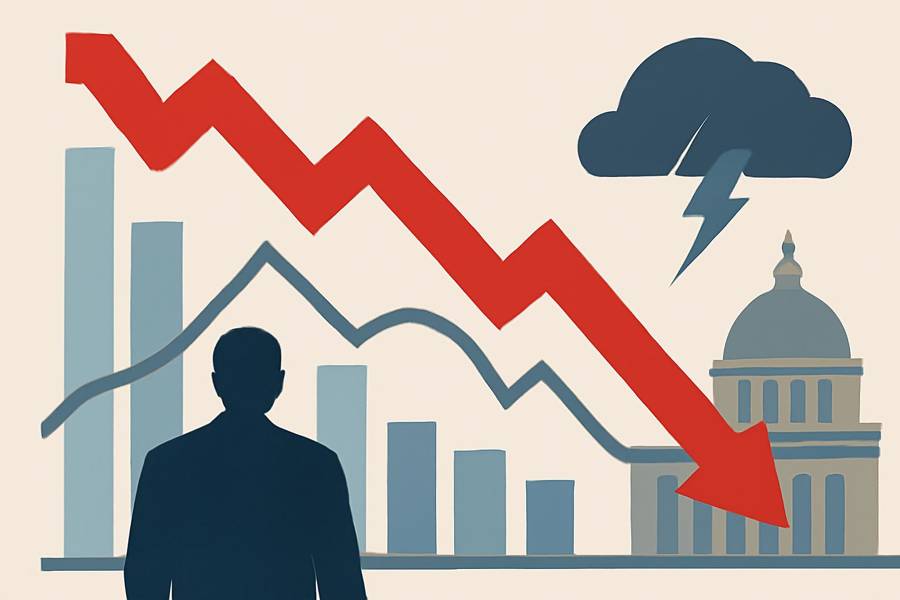
Wall Street’s AI trade hit the brakes on Friday, sending the Nasdaq sharply lower and dragging the broader market into a pullback. The S&P 500 and the Dow also fell, with both indexes moving into correction territory — the textbook line for a “correction,” according to CBS News and the Washington Post. The Nasdaq’s slide erased its gains for the year. CBS News noted the S&P 500 had logged several consecutive down days, its longest stretch in years.
Technology and AI‑linked names led the retreat. CBS News reported that chipmakers such as Advanced Micro Devices and Broadcom were among the biggest decliners amid worries about slower data‑center construction and tighter export rules. The Los Angeles Times framed the day as an unwinding of the AI trade that powered much of this year’s rally. Fortune added that Wall Street’s “fear gauge,” the VIX, jumped during the selloff, a sign of rising market stress.
This week’s drop capped a rough stretch for investors, with the Washington Post writing that the major indexes had their worst week in some time. Even as tech slumped, not every corner of the market fell: the Post pointed out that steadier consumer names such as Walmart and PepsiCo posted gains, suggesting some investors rotated toward defensive shares.
Why did the air come out of the AI trade so quickly? The sources point to a mix of concerns rather than a single headline. CBS News highlighted doubts about whether very high valuations for AI leaders can hold up if data‑center spending cools. The Los Angeles Times said questions are mounting about whether the massive AI buildout can be sustained, with investors also watching interest‑rate policy closely. Fortune reported that higher borrowing costs are part of the worry set making traders more skittish.
For context, a correction is painful but not unusual. Markets regularly overshoot and then reset. CBS News noted that while corrections can feel alarming, they don’t always become bear markets. The Associated Press tallied the day’s damage across the major indexes, underscoring how broad the selling was, while Yahoo Finance tracked intraday swings as the Dow and S&P 500 crossed into — and then closed in — correction territory.
Why it matters
Big down days don’t just live on trading screens — they show up in diversified mutual funds and index funds that sit inside many retirement accounts. If higher market volatility persists, borrowing can get pricier for companies and households, a concern Fortune and the Los Angeles Times flagged as part of what’s weighing on investors. And CBS News reported that a potential slowdown in data‑center construction is on traders’ minds — a reminder that when companies pull back on big projects, related hiring and overtime can cool, too.