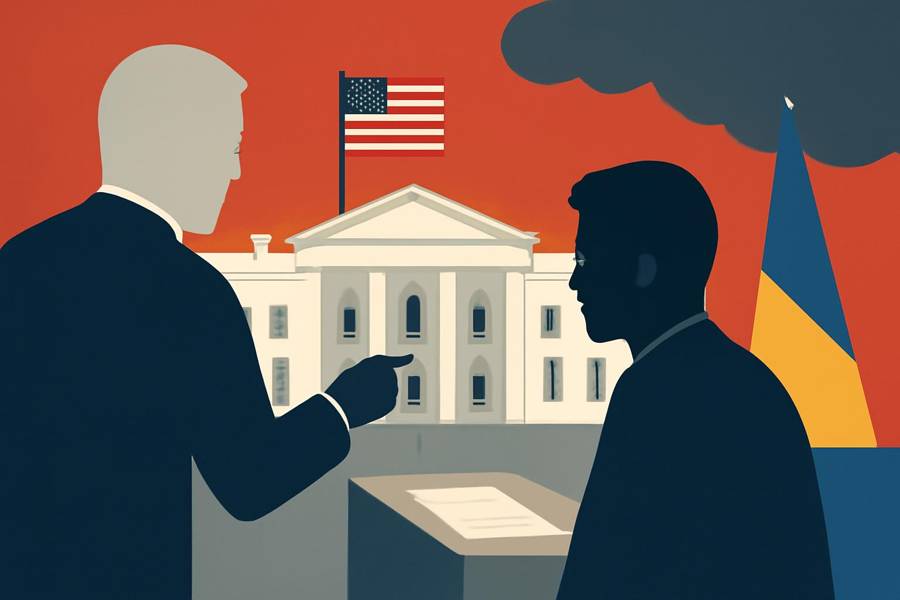
The rift between Washington and Kyiv widened after the White House recently waived new U.S. sanctions aimed at Russia’s energy sector, drawing bipartisan backlash in Congress and prompting Ukrainian President Volodymyr Zelensky to press lawmakers for answers. CBS News reported the move came shortly before penalties were scheduled to take effect under a bipartisan law the president signed earlier. S&P Global Commodity Insights said the administration framed the waiver as a way to preserve space for peace talks with Moscow.
As the policy whiplash hit, Zelensky held a virtual meeting with a bipartisan group led by Sens. Thom Tillis (R-N.C.) and Richard Blumenthal (D-Conn.), Axios reported. According to Axios and the Kyiv Independent, Zelensky told senators that Ukraine has seen sudden lapses in U.S. early-warning alerts for Russian missile launches, ongoing limits on Starlink and Starshield access at the front, and a hold-up of U.S.-made air-defense missiles paid for by partners but still waiting on Washington’s sign-off.
Parts of that account are in dispute. Axios noted that the White House and U.S. officials deny imposing new restrictions on intelligence sharing or weapons flows. The Washington Post reported U.S. officials said there has been no pause in intelligence sharing, and a senior Pentagon official said department policy has not changed. At the same time, the Post detailed delays in approving transfers of Patriot interceptor missiles from allied stockpiles that require U.S. approval, with one Ukrainian official saying Kyiv’s inventory is nearly depleted.
The Associated Press described ties as hitting a new low, citing both the sanctions waiver and battlefield problems, including disruptions to satellite support used by Ukrainian drones. Bloomberg reported that Zelensky accused the president of pushing Ukraine to “capitulate” to Russia — a sign of how public the split has become. The Washington Post added that recent public barbs between the two leaders mirror a broader freeze in assistance just as Russia keeps targeting Ukraine’s power grid.
Domestic politics are layered through the foreign-policy fight. CBS News said lawmakers in both parties condemned the waiver, and Rep. Mike Turner (R-Ohio) called for a congressional investigation. S&P Global noted that analysts questioned whether waiving the penalties and pursuing a separate diesel arrangement with Moscow would meaningfully lower U.S. fuel prices. The Post similarly reported skepticism from energy experts that these steps would move the needle for American drivers.
Meanwhile, Axios reported that Ukrainian officials say the immediate spark for the current crisis was a meeting about possible negotiations, where they claim U.S. envoys pressed Kyiv to curb strikes on Russian refineries — a claim U.S. officials deny. The Kyiv Independent said Zelensky is now appealing directly to Congress for clarity on what support he can count on heading into winter.
Why it matters
For Americans, this clash could show up in two places: the price at the pump and the steadiness of U.S. support for Ukraine. If Patriot and other air-defense shipments slow, Ukraine’s cities could be more exposed to Russian missiles. If the Russia waiver fails to dent fuel costs, voters could see political drama without economic relief. With midterm elections approaching, Congress may be asked to step in — to oversee, clarify, or override — as foreign policy and home-front concerns collide.