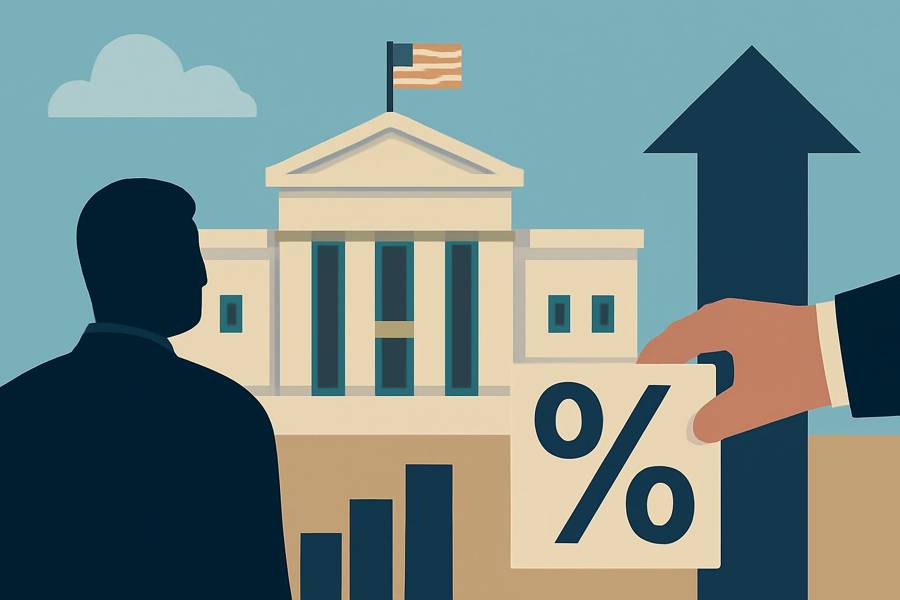
The Federal Reserve raised interest rates slightly on Wednesday, lifting its benchmark federal funds target to a new range — the first increase in several years. The move was approved by the committee and accompanied by projections that may leave the door open to another hike this year, according to the Fed’s official statement and summaries of the decision. The Board also adjusted the rate it pays on bank reserves, taking effect soon. Federal officials said the step is aimed at bringing persistent inflation closer to the Fed’s 2% goal.
In plain terms, higher Fed rates ripple through the economy. Borrowing tends to get pricier for credit cards, auto loans and other consumer debt, while mortgage costs can also be affected, the Associated Press and CBS News reported. Those channels are exactly how the central bank cools demand and, over time, price growth.
The decision is the first rate move under Chair Kevin Warsh. Axios reported that a majority of Fed officials now anticipate at least one more increase this year, while Warsh avoided giving firm guidance about what comes next. The Washington Post reported that Warsh struck an optimistic tone about economic resilience at his press conference while emphasizing that inflation remains above target. Stocks slipped after the announcement and remarks, with major indexes finishing lower, according to AP News and Yahoo Finance coverage.
Politics hovered over the decision. President Donald Trump has repeatedly urged the central bank to cut rates. Axios and Bloomberg Law reported that Wednesday’s hike — and the hint that more could follow — puts the White House at odds with the Fed. The Post and CBS News noted that Trump renewed his public calls for lower rates after the announcement. Still, the Fed’s statement and implementation note underscored the committee’s resolve to restore price stability, a reminder of the central bank’s independence.
Why now? Inflation has stayed sticky, with energy costs cited across outlets as a fresh source of pressure. The Washington Post and Axios pointed to higher oil prices and solid economic data as factors that strengthened the case for action. CBS News reported that the Fed’s new projections show officials expecting inflation to ease over time, but not fast enough to skip further tightening in the near term. For consumers, that means the era of steady or falling rates many hoped for this year isn’t here yet.
If you’re watching the mechanics, the key points are straightforward: the target range was raised, the committee approved the move, and officials signaled that another move could come if inflation doesn’t cool. UPI and CNBC’s coverage echoed those points, while the Fed’s own release detailed the related settings for bank reserve interest and the discount rate.
Why it matters
Everyday borrowing gets a little more expensive. Expect higher rates on credit cards and potentially on new car loans and some mortgages, while savers may see somewhat better yields. If inflation cools as the Fed intends, price increases could moderate — but if it doesn’t, another hike this year could follow. Politically, the move tests the relationship between an independent Fed and a White House pushing for cheaper money, with real consequences for family budgets and business plans.