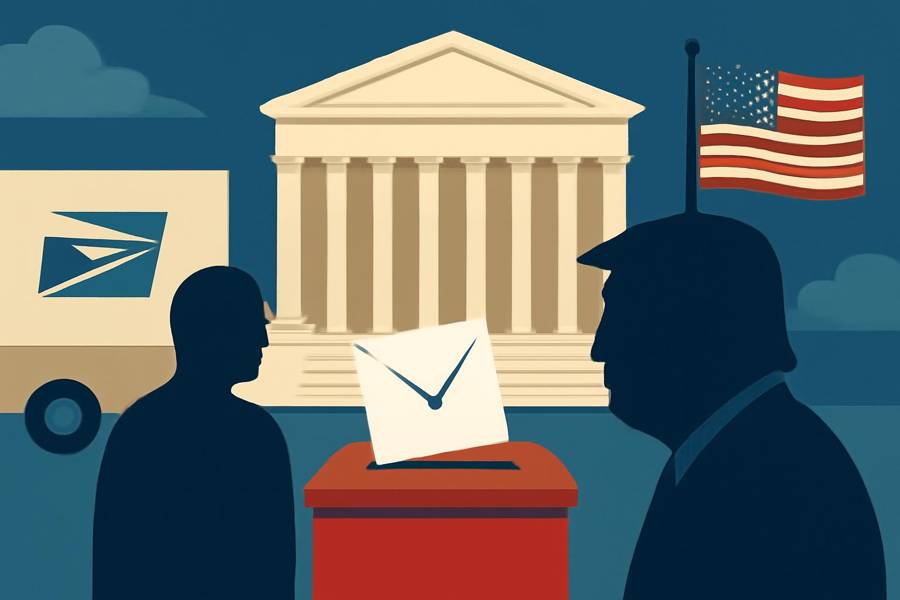
The Supreme Court on Monday rejected the Trump administration’s bid to tighten mail‑ballot rules ahead of the midterm elections, leaving states to run mail voting under their existing procedures. The unsigned order left in place lower‑court blocks on the U.S. Postal Service’s new rule, and news outlets reported ballots were already going out.
Roll Call reported the Court’s brief order indicated the government was unlikely to prevail; the order left in effect injunctions from lower courts as legal challenges continue.
What was on the table? As described by CBS News and the Los Angeles Times, the Postal Service’s rule would have imposed new barcode and data‑upload requirements for ballots and would have required states to provide lists of mail‑ballot recipients to a USPS portal. AP reported the rule could have allowed the Postal Service to take enforcement actions against noncompliant states. State election officials and voting‑rights groups said those changes could upend established processes and risk disenfranchising voters so close to an election.
Timing was central. AP noted that some states had already begun sending ballots. Election administrators warned there was no practical way to rewrite forms, retrain workers and stand up new data systems in weeks without creating confusion. Monday’s decision means those mail ballots may move through the system under the same rules voters have used in recent cycles.
The justices did not resolve the broader question of how much power the federal government—and specifically USPS—has over state mail‑voting programs. According to the Los Angeles Times, one justice wrote separately to limit the rule’s immediate effect while suggesting parts of it might be lawful on a longer timeline; other justices dissented. Fox News emphasized that the ruling leaves a nationwide block in place for this election.
There’s also some difference in how outlets characterize the ruling. Axios described the decision as striking down the USPS rule, while AP, CBS News and Roll Call framed it as an emergency order that halts the changes for this cycle and indicated the administration was unlikely to prevail. Either way, the immediate takeaway is the same: new federal mail‑ballot requirements are unlikely to take effect this fall.
Beyond the courtroom language, the effect is simple and practical. States can keep printing, mailing and processing ballots as planned. Voters who normally receive a ballot by mail may see no change. And local officials can focus on staffing and counting rather than scrambling to meet new barcode and data‑upload requirements that, as CBS News reported, some judges said may have exceeded USPS authority.
Why it matters
This decision could lock in the ground rules for mail voting in 2026, reducing the chance of late confusion for voters and clerks. It also means the Postal Service may not be able to impose new barcode and data‑portal steps for this cycle — steps that states said they could not meet in time. Put simply: the rules you expected for voting by mail this fall are likely to be the rules you get.