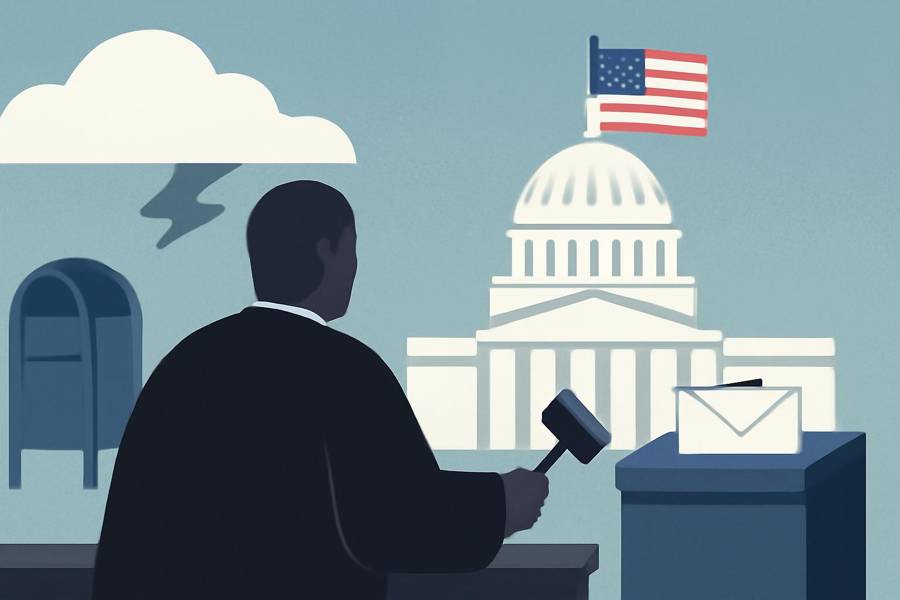
A federal judge extended a court order that temporarily prevents the U.S. Postal Service from implementing President Donald Trump’s executive order affecting mail‑in voting procedures, ahead of Election Day. U.S. District Judge Indira Talwani issued a preliminary injunction that keeps the Postal Service from enforcing the new requirements while lawsuits proceed, according to the Associated Press and the Washington Post. The administration said it may appeal to the 1st Circuit and has asked the Supreme Court for emergency relief, the AP and Los Angeles Times reported.
The case centers on a USPS rule created to implement an executive order earlier this year. Axios reports the rule would include requirements such as standardized ballot‑envelope designs and state‑specific lists of mail voters. The Los Angeles Times adds that reports said states would be expected to upload voter information to a new online portal and that USPS could withhold ballots that don’t match those records. Forbes reported the Postal Service finalized the rule this year.
Talwani emphasized the calendar. She said imposing new federal rules now could risk disenfranchisement, according to the AP’s account of her order. Earlier, the Supreme Court lifted an earlier block on parts of the policy because the case was considered premature before USPS issued a final rule. After USPS finalized it, states and voting‑rights groups refiled, and Talwani imposed the new hold that she extended, the reporting says.
At least one state had begun sending ballots, the AP reported, underscoring the time crunch facing election offices. While the Postal Service has said states can voluntarily opt in to the new system, neither the AP nor the Guardian identified any state that has chosen to do so.
The government argues the Postal Service has authority to set certain mail standards and that the changes are manageable, the Los Angeles Times reported. But the rule’s rollout has drawn fresh scrutiny after an anonymous USPS whistleblower alleged the agency was rapidly implementing an IT portal and adopting barcode rules that could lead to large batches of ballots being rejected, Forbes reported. In court filings and public statements, USPS has defended its work and said quality and security standards were not compromised, according to the Los Angeles Times and AP.
The ruling could keep the current system in place while appeals play out. Axios reports Talwani’s order blocks key elements like the mandatory design and portal requirements. The AP says the administration signaled an appeal to the 1st Circuit and has also asked the Supreme Court to intervene. The Guardian noted the justices have not ruled on the legality of the policy itself.
Why it matters
This decision affects how millions of mail ballots are prepared, accepted, and delivered at the height of election season. For voters, it means the rules you’re used to could remain the same while courts sort this out. For local election offices, it avoids last‑minute overhauls that could slow down ballot mailings. And for everyone, it may reduce the odds of confusion in a year when timing and clarity really count.