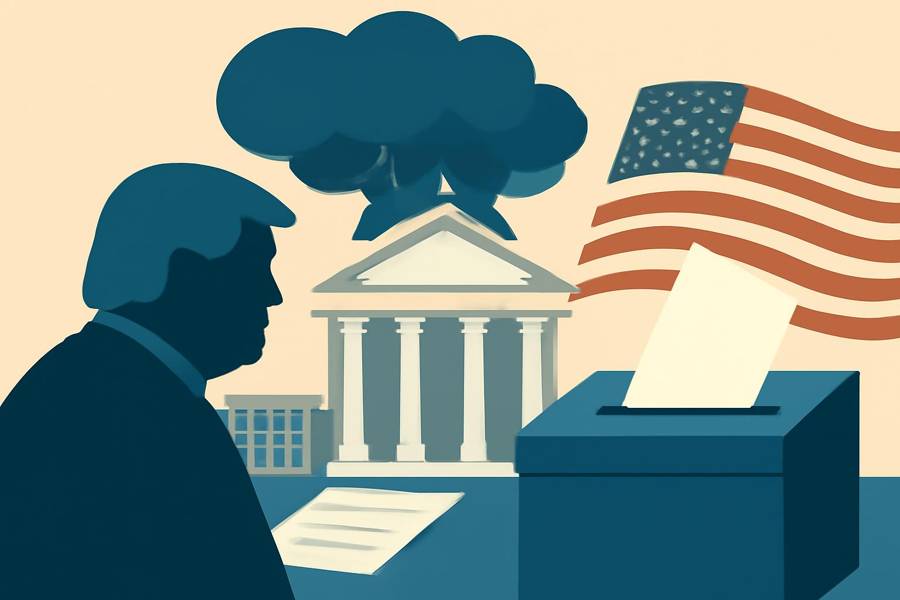
A federal appeals court has upheld a lower-court order blocking President Donald Trump’s executive order to create a federal list of eligible voters and to limit who can receive mail ballots, reporters said. The appeals court left in place a lower-court injunction that prevents the policy from being enforced in the states that sued, for now.
The executive order directed the heads of U.S. Citizenship and Immigration Services and the Social Security Administration to assemble a nationwide “state citizenship list” of eligible voters and instructed the U.S. Postal Service to deliver mail ballots only to people on that list.
Democratic officials in multiple states and the District of Columbia challenged the order in federal court, arguing that election rules are generally set by states and Congress rather than the president. A federal judge issued a preliminary injunction blocking enforcement of the order in the states that brought the suit.
The appeals court left that injunction in place as the case continues. The ruling rejected the administration’s request to allow the new limits on mail voting to take effect in time for upcoming elections in the suing states. Election officials had warned a last-minute switch to a federal list could cause confusion.
The government’s response was not entirely clear. The Justice Department said it is reviewing options and said it remains confident the executive order could ultimately be upheld. The White House and Justice Department did not immediately respond to requests for comment. For now, the administration cannot put the new policy in place in the states that sued.
Supporters of the order described it as a safeguard against voting by non-citizens. State election officials who sued called it unworkable and destabilizing, saying it could disrupt established mail-ballot systems, according to news reports. The appeals court left the scope of the lower court’s order unchanged, applying only to the plaintiff states and D.C.; the rest of the country is unaffected unless and until other courts weigh in or the case reaches a broader decision.
Why it matters
For voters in the states that brought the lawsuit, the rules they know stay in place for now. No new federal voter list will be built or used before upcoming elections in those states, and mail-ballot procedures remain under state control. The case could still move, but as elections approach, consistent rules reduce headaches for local officials and fewer surprises for voters.