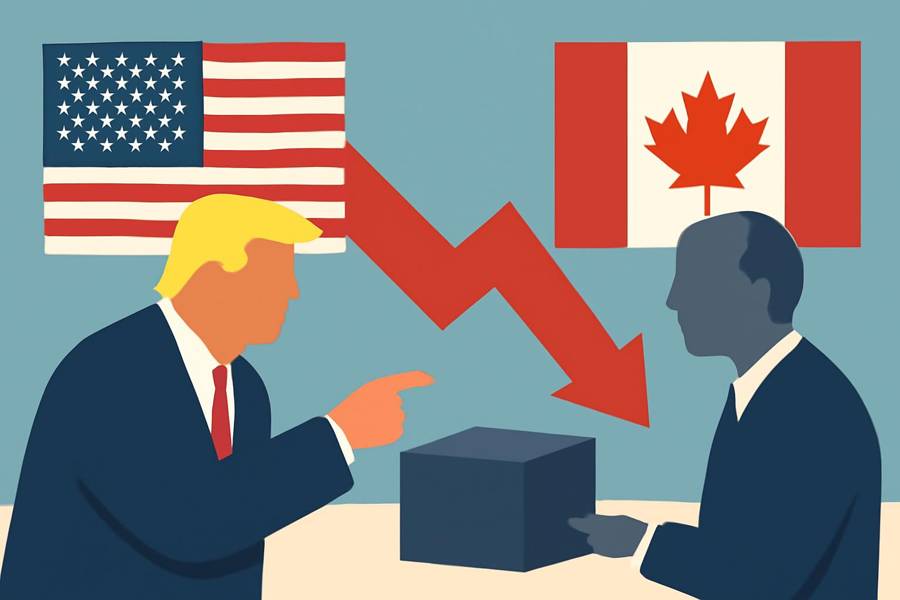
President Donald Trump on Monday imposed a 50% tariff on most Canadian imports, a sharp escalation with one of America’s closest trading partners that could mean higher prices for everyday goods and a fresh round of retaliation. The move targets items such as hockey sticks, wine and cement, according to Axios, and follows White House statements that Canada has treated U.S. autos, alcohol and dairy unfairly, the Associated Press reported.
The tariffs are reported to take effect in about 30 days, leaving a short window for talks. The administration is using Section 338 of the Tariff Act of 1930, a rarely invoked authority, to justify the action, per both outlets. AP reported that proclamations were issued under that law. Axios noted the new duties could hit goods that otherwise would have been duty‑free under North America’s trade pact, intensifying the potential impact.
Not everything is covered. Both outlets said most energy products were reported to be exempt, along with critical minerals and potash; AP also listed fish among the exclusions. Axios estimated the measure would apply to a portion of annual Canadian exports. The administration also pointed to Canadian provincial decisions to remove some U.S. liquor products from store shelves as part of its case, Axios reported.
Canada signaled pushback and a preference for talks. Axios reported that a Canadian official described the move as a violation of the USMCA and pledged to intensify negotiations. AP reported that Canadian officials said their government believes in free and fair trade and is prepared to negotiate. Business groups on both sides of the border urged de‑escalation: the Canadian Chamber of Commerce called the action regrettable and pressed for progress during the reported window, while the Distilled Spirits Council of the United States encouraged a negotiated solution, AP reported. Ontario Premier Doug Ford urged Ottawa to match U.S. tariffs one‑for‑one, according to AP.
The step lands amid broader strain in North American trade. Axios reported the administration declined to extend certain trade arrangements, and said limits on other emergency tariff authorities pushed officials to lean on Section 338 instead. Together with earlier U.S. tariffs, the action could deepen uncertainty for companies that ship parts and products back and forth across the border — and for the families and small businesses that buy them.
Why it matters
For U.S. shoppers, a 50% tariff could show up as higher prices on some Canadian goods, from construction materials to items on store shelves. Cross‑border supply chains — especially in autos and food and drink — could face new delays and costs. If Canada retaliates, American exporters could be affected too. The bottom line: this dispute could hit household budgets and business plans on both sides of the border.