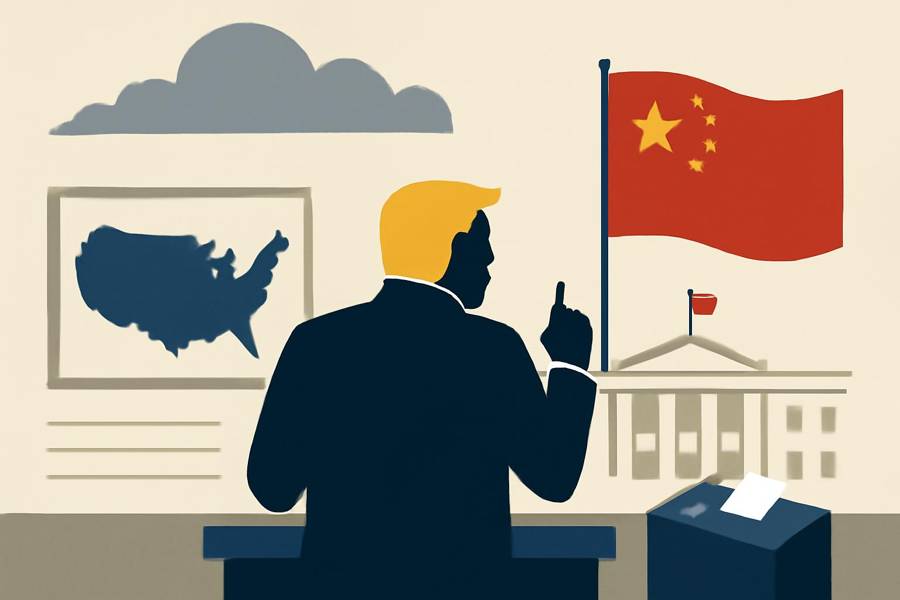
In a recent nationally televised address, President Donald Trump said he was declassifying election‑related intelligence and argued the U.S. voting system has serious weaknesses. But the material released alongside the speech did not show votes were changed or machines were hacked, and independent reviews found no proof of tampering in a prior presidential election. The Washington Post reported that the president’s remarks focused on potential “vulnerabilities” rather than evidence of altered results, while CBS News noted a White House briefing earlier in the day acknowledged the new files did not allege switched votes or compromised tabulators.
Much of the address centered on China. Trump said Beijing obtained a large number of voter records and suggested that undercut election security. Both CBS News and PolitiFact pointed out that voter registration information is widely available in many states and can often be purchased or requested legally; possession of those files, on its own, does not necessarily breach state systems or enable ballot manipulation. PolitiFact also noted a declassified assessment concluded no foreign actor attempted to alter the technical side of that election’s voting process. That report documented a minority view that China took steps to denigrate Trump, but it did not find evidence of interference with voting systems.
Trump also highlighted claims about noncitizens and deceased individuals appearing on voter rolls. CBS News reported he cited a Department of Homeland Security review that asserted a large number of noncitizens on rolls in multiple states. Election experts interviewed by CBS News questioned the underlying data and warned that commercial databases can misidentify eligible voters. CBS further pointed to years of research and state audits showing confirmed instances of noncitizen or deceased voting are rare.
The document release included records tied to a voter‑registration drive in Muskegon County, Michigan, that investigators believed produced fraudulent registration applications. According to CBS News, the FBI inquiry was closed, and state officials said the questionable forms were caught before any illegal votes were cast. The speech also revisited long‑running concerns about voting machines. CBS News reported that the newly public intelligence about machine tampering focused on systems not widely used in the United States and that experts say audits and paper ballots make widespread manipulation difficult.
On policy, Trump again pushed Congress to pass the SAVE America Act, including stricter citizenship and ID requirements. PolitiFact reported the legislation remains stalled in the Senate. Reaction to the address split along party lines: Republicans praised the focus on security, while Democrats said the president recycled claims that have been repeatedly debunked, The Washington Post and CBS News reported.
Why it matters
Millions of Americans could vote in this year’s midterms, and confidence in how those votes are cast and counted affects whether results are accepted. The declassified files spotlight the difference between foreign influence efforts and proof of altered tallies—an important distinction for voters. The release could spark renewed fights in Congress and statehouses over voter‑roll maintenance, ID rules, and equipment testing. For regular people, the practical takeaway is simple: local election offices still rely on paper trails and audits to verify results, and none of the new documents show those safeguards failed in that prior election.