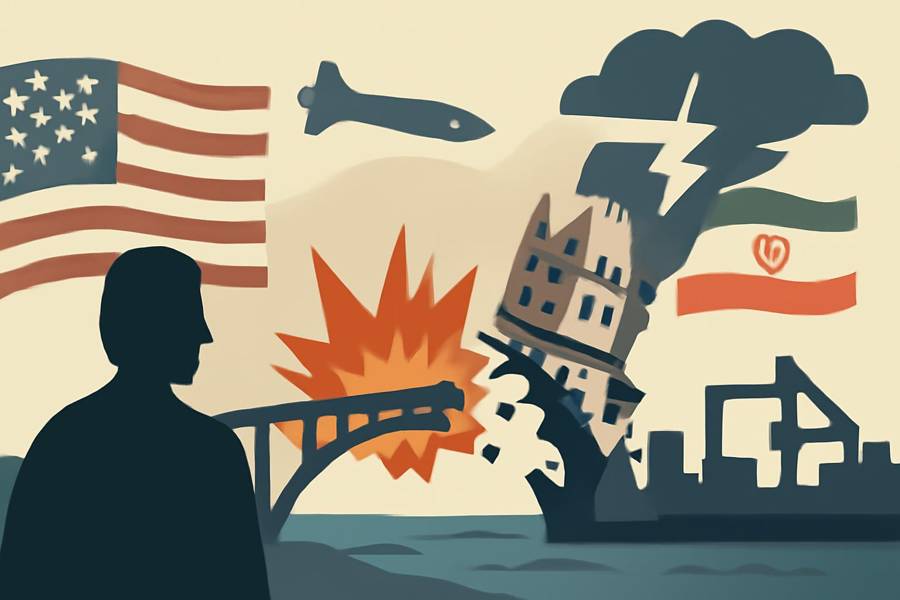
The United States widened its strikes inside Iran on Friday, July 17, hitting multiple bridges and energy sites as fighting around the Strait of Hormuz escalated. The Associated Press reported that a tower at Iran’s Chabahar port on the Gulf of Oman collapsed after a strike, citing Iran’s state-run IRNA. U.S. Central Command said the latest wave, which wrapped up at dawn Friday, marked another night of attacks and targeted numerous sites, according to the AP.
The bridge strikes were concentrated in southern Hormozgan province, where Iranian state television said several people were killed in the Bandar Khamir area. Separately, Iran’s Health Ministry told the AP that dozens had been killed and hundreds wounded nationwide. Iran described the Chabahar port tower as an operations post for commercial traffic; the AP noted that Iran’s Revolutionary Guard also runs operations at ports around the country.
U.S. enforcement at sea also intensified. AP reporting said American forces have redirected multiple commercial vessels that tried to breach a U.S. naval blockade on Iran, disabled one vessel that did not comply, and boarded another for checks. Fox News’ live updates similarly reported that U.S. forces disabled a ship to enforce the blockade and that the strikes continued into another night.
The cross-border fallout widened Friday. According to the AP, Qatar urged people to take shelter as air defenses intercepted missiles; the country’s Interior Ministry said falling debris wounded at least one child. Jordan’s military said it shot down incoming missiles. The British military’s maritime warning service reported that a tanker was attacked while transiting a route near Oman, sustaining minor damage with no injuries, the AP added.
These latest moves follow a round of U.S. strikes earlier in July that the Pentagon said were launched after renewed Iranian attacks on commercial ships in the strait. Axios reported that U.S. forces struck many targets then, including air defenses, coastal radars, anti-ship missile sites, drone launch areas, and small boats the outlet said belong to Iran’s Revolutionary Guard. Axios also reported that, shortly before those strikes, the Treasury Department revoked sanctions waivers that had allowed Iran to sell oil. Since then, Fox News and the AP have both noted that U.S. officials have warned Iranian leaders that power plants and bridges could face further strikes if the attacks on shipping continue.
The AP reported that some tankers are avoiding the chokepoint altogether or switching off tracking devices, and that pipelines can’t fully replace seaborne flows. In peacetime, a significant share of the world’s traded oil and natural gas moves through the Strait of Hormuz, the AP noted.
Why it matters
What happens in the Strait of Hormuz doesn’t stay there. It’s a key route for global oil and shipping, and disruptions can ripple into U.S. gas prices and delivery costs. With bridges and port infrastructure now in play and missiles flying across borders, the risks to energy markets and trade lanes that touch everyday American budgets are rising.